Say you are comparing two condos in Destin, similar square footage, similar view, maybe even the same block near HarborWalk. One lists monthly dues at $650. The other lists $950. Most buyers do the math the obvious way and lean toward the cheaper one. That instinct is exactly backward often enough that it deserves a second look before you write an offer.
The dues on a listing sheet are a snapshot, not a forecast. What determines your real cost of ownership over the next five years is not the number in the MLS field. It is whether that association has already done the expensive, unglamorous work Florida now requires of it, or whether it is still catching up. As of January 1, 2026, the grace period for the state's post-Surfside condo safety laws officially ended, and that deadline changed what a "good deal" looks like on paper.
The Law That Just Finished Phasing In
After the Champlain Towers South collapse in Surfside in 2021, Florida rewrote its rules for condominium reserves. Buildings three stories or higher must complete a Structural Integrity Reserve Study, commonly shortened to SIRS, along with a milestone inspection once they reach a set age, generally 30 years, or 25 years for buildings near the coast. For decades, plenty of associations voted every year to waive full reserve funding so monthly dues would stay low and predictable. Under the current law, that option is gone. For budgets adopted on or after January 1, 2025, associations subject to SIRS can no longer underfund those reserves, and by the start of this year the compliance window had closed.
That is not a detail buried in a statute somewhere. It is the reason some Destin owners have opened mail in the past several months with bills running into the thousands, sometimes tens of thousands, of dollars. Associations that spent years keeping dues artificially low are now required to fund the gap all at once, and many are doing it through special assessments rather than a gradual dues increase.
A building that kept dues low by deferring its reserves is not cheaper. It has simply moved the bill to a date it did not put on the listing.
House Bill 1021 added a second layer worth knowing about if you are shopping right now. Associations with 25 or more units must give owners digital access to governing documents, budgets, and reserve studies through a website or app. If you are a buyer, that same transparency requirement is your friend during due diligence. Ask for it before you assume anything based on the dues line alone.
What a Funding Gap Actually Costs
Special assessments tied to structural work in older coastal buildings commonly run from the low five figures into six figures per unit, depending on the scope of concrete restoration, re-roofing, or life-safety upgrades required. That is a wide range, and where a specific building lands inside it depends entirely on how much its board deferred and for how long.
Hurricane deductibles compound the exposure. Florida condo associations often carry a named-storm deductible set as a percentage of the building's insured value rather than a flat dollar figure, and that percentage is frequently somewhere in the range of one to five percent depending on the carrier and the building. On a building insured for $10 million, a two percent deductible works out to $200,000 the association has to cover before its policy pays a claim. If reserves are thin, that gap gets passed straight to owners.
This is why a comparison built only on monthly dues misses the real question. A building charging $950 a month with fully funded reserves and a completed milestone inspection may carry less financial risk over a five-year hold than one charging $650 with a reserve study that flags a funding shortfall. The cheaper fee today can be the more expensive decision by year three.
A Local Example Worth Knowing
You do not have to look outside Destin to see this play out. Silver Shells, one of the area's larger resort-style associations, had unfunded capital projects and reserve study work show up on its board agenda in December 2024. That is not a red flag specific to one property. It is a reminder that even well-regarded, amenity-rich Destin communities are working through the same reserve math as everywhere else in coastal Florida. The building's reputation and finish quality tell you very little about where it stands on this particular question, which is exactly why the paperwork matters more than the walkthrough.
Why Location Inside Destin Changes the Math
Destin is not one market wearing one price tag, and that matters for how you weigh any of this. Resideline's tracking of closed sales in Destin over the six months ending in August 2026 put the median closing price at $592,250, but the middle half of those sales closed anywhere from $372,500 to $1,000,000. A spread that wide, wider than the median itself, tells you the citywide number is close to useless as a pricing tool here. Position relative to the water and the harbor moves value far more than any single figure attached to the whole city.
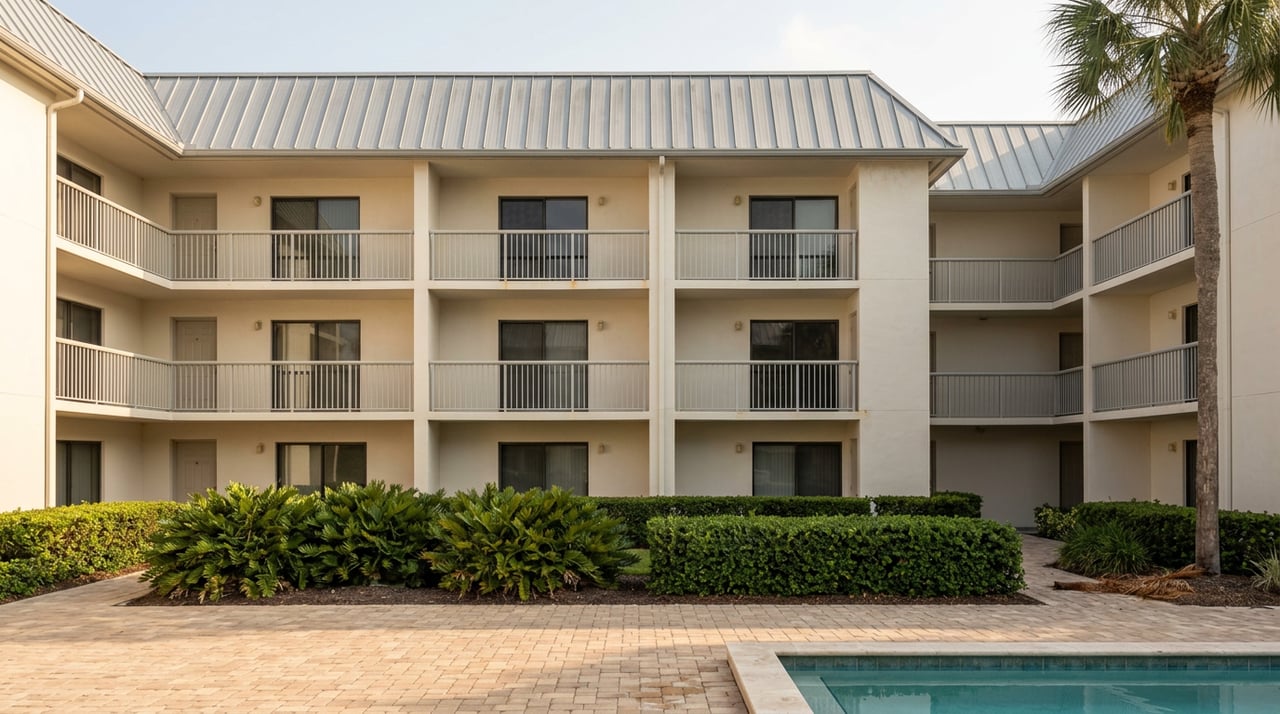
The same logic applies to reserve risk. A high-rise condo tower on Holiday Isle near HarborWalk Village falls squarely under the three-story SIRS and milestone inspection requirements, with an accelerated 25-year inspection window because of its coastal location. A low-rise cottage-style property over in Crystal Beach, built to a different scale, may sit outside that same regulatory trigger entirely. Two properties both called "Destin condos" can carry completely different exposure to this law depending on height and age alone, which is one more reason a single market average cannot tell you what you actually need to know about a specific building.
The Documents That Actually Answer the Question
Before you get attached to a unit, ask for a specific stack of paperwork rather than relying on what a listing summarizes:
- The most recent Structural Integrity Reserve Study and whether the funding schedule is current
- The milestone inspection report, if the building has reached the age threshold, and whether it identified any substantial structural deterioration
- The current association budget, broken out by category rather than a single dues total
- The master insurance policy's declarations page, including the named-storm deductible basis
- Any board minutes or meeting agendas from the past 12 to 18 months referencing capital projects or funding shortfalls
If a milestone inspection turns up substantial structural deterioration, the association generally has to begin repairs within 365 days, and the inspector's summary is required to reach owners within 45 days of completion. Florida law also gives condo buyers a window to cancel the contract after receiving the required document packet. Reported lengths for that window vary depending on whether the sale is a resale or a developer transaction, so confirm the exact number with your closing attorney rather than assuming it matches what you read online. Either way, that window only helps you if you actually read what you are given, which is the entire point of asking for the paperwork early rather than during the final week before closing.
If you are financing the purchase, your lender will independently check the building's health through Fannie Mae's condo project review process, looking at owner-occupancy ratios, litigation status, and reserve adequacy. A building with real financing restrictions will surface there regardless of how the listing describes it, so it is worth knowing before you fall for a unit your lender may balk at later.
None of this is limited to Destin. Miami-Dade County relaunched its own condominium assessment loan program in early 2026 to help qualifying owners cover exactly these kinds of bills, which tells you the pattern showing up here is part of a statewide reset rather than a local anomaly.
A Few Questions That Come Up Often
Does a lower HOA fee always mean a riskier building? Not always, but it is worth verifying rather than assuming. A lower fee can reflect fewer amenities or a smaller building footprint just as easily as it can reflect deferred reserves. The only way to know which one you are looking at is to request the reserve study and budget rather than judging by the number alone.
What happens if a milestone inspection flags a problem after I am already under contract? The association is required to get that finding to owners within 45 days, and required repairs generally have to start within 365 days of the flag. If that surfaces during your document review period, it is exactly the kind of finding your cancellation rights exist to protect you from.
Are single-family homes in Destin exempt from any of this? Yes, this entire framework applies to condominium associations, not detached single-family properties. If you are weighing a cottage-style home in a neighborhood like Crystal Beach against a high-rise unit near HarborWalk, that is one more real difference between the two, not just a matter of style.
Reading a Destin condo listing accurately means reading past the dues line to the documents behind it. That is not a complicated skill, but it takes someone who knows which page to turn to and which building's history is worth asking about before you sign anything.
If you are comparing specific buildings in Destin and want a second set of eyes on the reserve study before you write an offer, Dickson Group is glad to help you work through it. Let's Connect.